Posted by: zida Posted by: zida2020-12-09
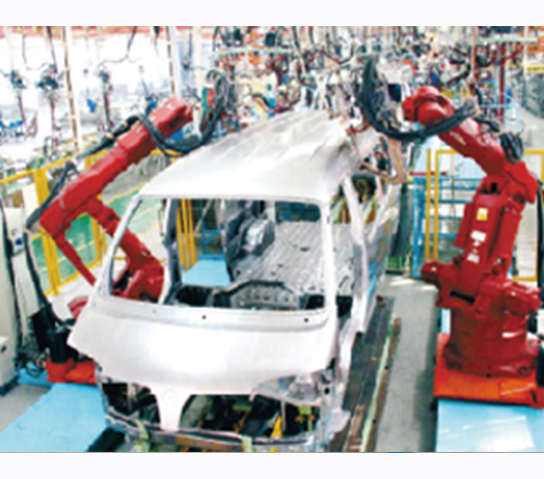
In the past 20 years, with the development of digitalization, automation, computer, and mechanical design technology, as well as the high attention to welding quality, automatic welding has developed into an advanced manufacturing technology. The role of automatic welding equipment in various industrial applications is increasing, and its application scope is rapidly expanding. In modern industrial production, the mechanization and automation of the welding production process is an inevitable trend for the modernization of the welding mechanism manufacturing industry.
According to the degree of automation, automated welding equipment can be divided into the following three categories:
1. Rigid automated welding equipment, also known as primary automated welding equipment, is mostly designed based on the principle of open-loop control. Although the entire welding process is automatically completed by the welding equipment, there is no closed-loop feedback system for fluctuations in welding parameters during the welding process, and possible deviations cannot be randomly corrected.
2. Adaptive control automation welding equipment
Adaptive control welding equipment is a highly automated welding equipment that is equipped with sensors and electronic detection circuits to automatically guide and track the weld trajectory, and implement closed-loop feedback control for the main welding parameters. The entire welding process will be automatically completed according to pre-set programs and process parameters
3. Intelligent automatic welding equipment
It utilizes various advanced sensing components, such as visual sensors, tactile sensors, auditory sensors, and laser scanners, and utilizes computer software systems, databases, and expert systems to have functions such as recognition, judgment, real-time detection, calculation, automatic programming, welding parameter storage, and automatic generation of welding record files

Mobile Browsing
Sweep WeChat Consultation